dinacharya: fall edition

 
Vata Balancing Dinacharya Practices

ayurveda and seasonal transitions

According to Āyurveda, seasonal transitions, in particular the transitions from spring to summer, and from summer to fall, are times when more care and attention must be given to maintain doshic balance.

Successfully navigating a seasonal transition while maintaining good health and wellness requires a level of self-knowledge and awareness so that one can learn to cultivate balance between ourselves and the environment that we live in.

If we do not go about taking care of our bodies during these transitions, imbalances in the body may manifest as allergies, cold, flu, congestion, or any number of ailments.⁠

When the seasons change, we experience a sympathetic internal shift. All life-forms open themselves up to receive cosmic redirection from nature during these crucial seasonal transitions, so we are likely to be more vulnerable and unsettled.
— Maya Tiwari

vata dosha

The qualities of Vata dosha are cold, dry, light, rough, mobile, subtle, and clear. With a dominance of these qualities in the macro environment in the fall, we must find ways to pacify, or balance Vata dosha so that we do not become overwhelmed with Vata.

Vata shows up in many ways in the external environment during this transition; cooler temperatures, more movement/mobility (in the form of wind), drier air, the manifestation of rough qualities (think dry, crunchy leaves), and a quality of lightness in the air.

The micro environment of the body begins to take on these qualities, which can look like:

  • Cold: coldness/numbness in hands and feet, poor circulation

  • Dry: dry skin, lips, and scalp, constipation

  • Light: feeling ungrounded, busy mind

  • Rough: cracking skin, carelessness, rigidity

  • Mobile: restlessness, racing thoughts, insomnia, irregular appetite

  • Subtle: feeling ungrounded, insomnia, weight loss, fear/worry/anxiety

  • Clear: forgetfulness, losing things (where are my keys!)

practices to cultivate balance

Creating a healthy, seasonally appropriate dinacharya goes a long way ways to pacify Vata dosha. Vata is inherently mobile and irregular, so stability and regularity will be keys to Vata pacification. Remember that in order to balance dosha, you must utilize opposite qualities. Introduce qualities of hot, oily, heavy, slimy, static, gross. Here are some of our favorite ways to pacify dosha to stay balanced this fall:

Cultivate Stability. Perhaps the most effective way to manage excess Vata is to create rhythm and routine. Having places to anchor meal times, wake/sleep times, and other activities is very grounding and calming to Vata dosha. Consider finding stability in one of our weekly asana classes.

Eating Appropriate Foods. Ahara (food) is comprises our largest daily input. So you what and how you eat will have a big seasonal impact. Make sure you’re eating warm, soupy/stewy, well-spiced meals. Need some inspiration? Check out an upcoming Ayurvedic Cooking Class.

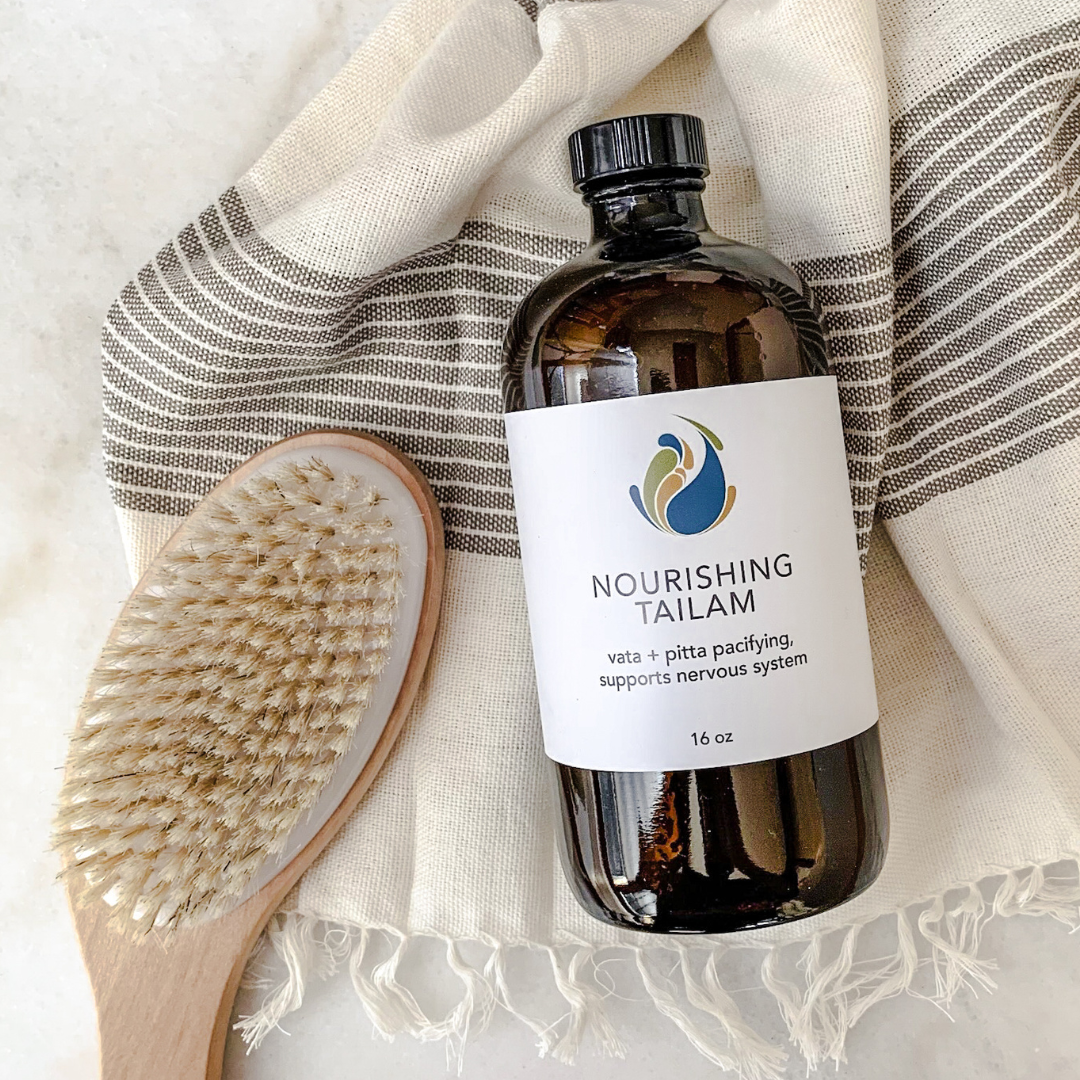
Practice Abhyanga. We love abhyanga! A very effective way to combat stress, anxiety, and overwhelm, abhyangha promotes joint health, nervous system regulation, and deep sleep. It also helps to balance the doshas, promote deep relaxation, and a peaceful mind. Visit our blog to read more about how to perform this ritual, and shop the apothecary to get your doshic daily massage kit.

Use Oil Everywhere. Oil is Vata’s most therapeutic substance, so lean in. Besides abhyanga you can practice Karna Purna (ear oiling) and Nasya (nasal oleation) to keep Vata and the spaces it occupies calm.

Tanmatra Cikitsa. Subtle therapies offers powerful medicine for Vata’s often sensitive system. Calming, rhythmic sound; compression clothing or weighted blankets; and Vata-pacifying scents like Jatamamsi and Hina Attar work wonders to ground and soothe.

Herbal Tea as Medicine. It’s easy to forget that your delicious cuppa is also serious medicine. This season Vata Root Down, Mental Clari-Tea, Sereni-Tea, and Medhya Rasayana all fit the bill.

It’s also the time of year to consider your Rtucharya (seasonal routine). An Ayurvedic Fall Rejuvenation can reset doshic patterns in BIG ways. Check out the AWC calendar to catch our next Ayurvedic Cleanse.

These seasonal supports make tending your Vata easy and enjoyable. 👇🏼

doshic loose leaf teas
from $10.00

vata root down tea

Root Down Tea is formulated to counter the light, dry, airy qualities of Vata Dosha. When you need to feel grounded, present, and steady of mind brew a daily cup of Root Down. This blend contains Ayurvedic Herbs that support the nervous system, strength of digestion, and the adrenals.

Boil 2-4 tsp for 10-20 minutes and strain. Add milk/mylk and sugar for an extra cozy cup. If adding milk, be sure to boil for an additional minute or two. Do not boil mylk.

In a pinch, steep 1-2tsp in hot water for 10 minutes.

pitta cool refresh tea

When Pitta get overheated and cranky, Cool Refresh is a lovely support. Cooling, blood nourishing, and a little sweet - this blend makes a Pitta pacifying and delicious cup.

Steep 2-4 tsp in hot water for 3-5 minutes. Let cool completely (for most effectiveness), or drink warm.

Alternatively, brew at room temperature or under the light of the moon for 8-12 hours. Discard herbs and refrigerate.

kapha bright fire tea

Bright Fire tea is a warming antidote to slow, sluggish Kapha-type digestive fire. A cup of this tea 20-30 minutes before a meal supports strong digestion, and lessens the physical accumulations Kapha brings.

Boil 1-2 tsp in water for 5-10 minutes. Strain and enjoy! In a pinch, try steeping 1-2 tsp in hot water for 5-10 minutes.

2oz + 5oz

lip balm
$7.00

Because lips need Āyurvedic love too! Choose from our line of doshic lip balms, or select one of our seasonal balms.

Vata: An herbal infusion of asvagandha, complimented by a sweet and aromatic trio of almond, cardamom, and Turkish rose.

Pitta: An herbal infusion of amalaki, complimented by a cooling trio of coconut, Malagasy lemongrass, and peppermint.

Kapha: An herbal infusion of tulsi, complimented by an invigorating trio of grapefruit, eucalyptus, and Malagasy ginger.

Chai Spice: the real deal! a blend of black pepper, cinnamon, clove, anise, and vanilla. Spicy divinity!

Moon: The vanilla and peru balsam scent will lull you to sleep. Azulene packed blue chamomile soothes your lips for some true beauty z's!

grounding tailam
from $19.00

Grounding Tailam is a traditional formulation that pacifies Vata dosha across all tissue systems. It’s warming, nourishing, and grounding, and there is a weight to this oil which soothes the nervous system. And because of the exacting traditional preparation of this oil, it absorbs into the skin quickly and deeply, minimizing any residue on the skin!

Tailam means "oil" in Sanskrit, and Grounding Tailam is part of a new series of classical, Āyurvedic oil preparations we are offering at the Ayurvedic Wellness Center. This oil is appropriate for whole body abhyanga as well as massaging crown, ears, and feet with before bed.

This oil is a great option for those who are already using the Vata Daily Doshic Massage Oil and would like to try something in a more traditional preparation.

4oz/16oz

mullein garlic ear oil
$19.00

Karna Purna is the Āyurvedic practice of oiling the ear. Vata Dosha is a combination of Air & Ether elements. Ether element rules the organ of the ear and hearing, and we can use the oiling the ear canal as means to pacify dosha.

This ear oil combines herbal ingredients including garlic, calendula, st. john’s wort, and olive oil to allow for a wide spectrum of ear problems to be addressed. We like to use it to oil the ear canal during abhyanga, or fill the ear canal with oil prior to sleep. It invites a sense of groundedness, quiet, and calm, while also addressing auditory sensitivities.

This ear oil is also gentle enough to be used on children and animals. Comes with a dropper for easy use.

1 oz

hina attar
$15.00

An ancient and very traditional Indian formulation, Hina is a blend of more than 35 different spices, herbs, flowers oils, and wood oils in a base of sandalwood. Aromatic, earthy, floral, and sweet, Hina is like capturing India in a bottle. It is used therapeutically for its warming, grounding qualities.

Hina is said to have a mystical ability to open the heart chakra, and third eye, and to awaken Kundalini Shakti. This attar acts as a strengthening rejuvenative that works well for Vata and Kapha dosha.

1 dram

jatamamsi e.o.
$19.00

The essential oil of Jatamamsi is supportive in soothing an exhausted nervous system. This nutritive tonic is useful to balance sympathetic activation and to cultivate grounded and restful sleep. It can also be used to enhance clarity of perception.

Balancing for all doshas. For topical use, add to base oil.

1 dram


related posts

loved what you learned? feeling inspired? share this article with someone who would benefit!
you can also share via the social icons below.