
bloating: getting to the root with Ayurveda

Bloating is one of the most common things clients bring to us. And one of the most frustrating, because it tends to get dismissed.
It is also an early sign of imbalance, one that can precede more serious digestive disturbance or disease processes if left unaddressed. Clients with frequent or chronic bloating have usually tried a variety of approaches by the time they find us. They have eliminated gluten or dairy, tried probiotics, added digestive enzymes, or shifted to smaller, more frequent meals.
These things might help for a while. They may not make a notable shift at all. Elimination diets and targeted supplements are rarely enough to address the root cause of what the body is signaling.
What Ayurveda offers here is a different starting point: not a symptom to suppress, but a pattern worth understanding.
what is bloating, really?
From a Western perspective, bloating is described as a sensation of fullness, tightness, or pressure in the abdomen, sometimes with visible distension. The triggers vary: food intolerances, slow gut motility, bacterial imbalances, stress, and hormonal shifts. Between 10 and 25 percent of otherwise healthy people report it regularly.
The conventional approach tends to identify the trigger and remove it. Eliminate the food. Take the supplement. Manage the symptom.
Ayurveda starts somewhere else entirely.
agni, vata, and the language of gas
In Ayurveda, digestion is understood through the concept of Agni, your metabolic fire. When Agni is strong and balanced, food is transformed efficiently, nutrients are absorbed, and waste is eliminated. When Agni is weakened or irregular, the result is Ama, undigested metabolic residue that accumulates in the channels of the body.
Bloating, in Ayurvedic terms, is typically a sign of incomplete digestion. This incomplete digestion, yielding Ama accumulation, disrupts Vata, which governs downward movement and elimination. When these forces are out of balance, gas accumulates, movement stagnates, and the body starts sending signals.
What this means practically: the issue is not just what you ate. It is the state of your digestion when you ate it.
the patterns we see most often
Ayurveda does not point to a single cause. It asks: what is the pattern? Here are the ones that come up most in clinical practice.
weak or variable Agni.
Eating too quickly, eating while distracted or stressed, eating at irregular times, under- or overeating: all of these dampen digestive fire. A weakened Agni cannot fully process even nourishing food. The result is fermentation, gas, and that familiar post-meal heaviness.
Vata aggravation.
Vata governs movement in the body, including the movement of gas through the digestive tract. When Vata is elevated, the digestive rhythm becomes irregular, and gas gets stuck rather than moving. Dry foods like popcorn, pretzels, and crackers; raw foods like salads and raw vegetables; astringent foods like beans and lentils prepared without adequate spice and fat; travel; skipping meals; and cold, dry weather all push Vata in that direction. This is a prime example of Ayurveda’s maxim, like increases like.
Incompatible food combinations.
Ayurveda has a nuanced understanding of incompatible foods. Certain combinations, fruit with other foods (especially dairy), cold liquids with a hot meal, raw foods alongside cooked, can disrupt digestion in ways that have nothing to do with sensitivity and everything to do with how foods interact in the gut.
Accumulated Ama.
When digestion has been compromised over time, Ama builds. You may notice a coated tongue in the morning, a heaviness that does not resolve with rest, fatigue after eating, or chronic bloating that seems to have no clear trigger. This is the body signaling that something deeper needs attention.
how we approach it
Rather than suggesting a one-size-fits-all protocol, Ayurveda works with your individual constitution, your Prakriti, and your current state of imbalance, your Vikriti. What supports one person’s digestion may be wrong for another. This is the core of individualized care.
That said, a few foundational practices support digestive health across all constitutions:
Eating at consistent times each day stabilizes Agni. The largest meal at midday, when digestive fire is naturally strongest, is something we return to again and again in practice.
Warm, cooked, lightly spiced food is easier for a compromised digestive system to process than raw or cold.
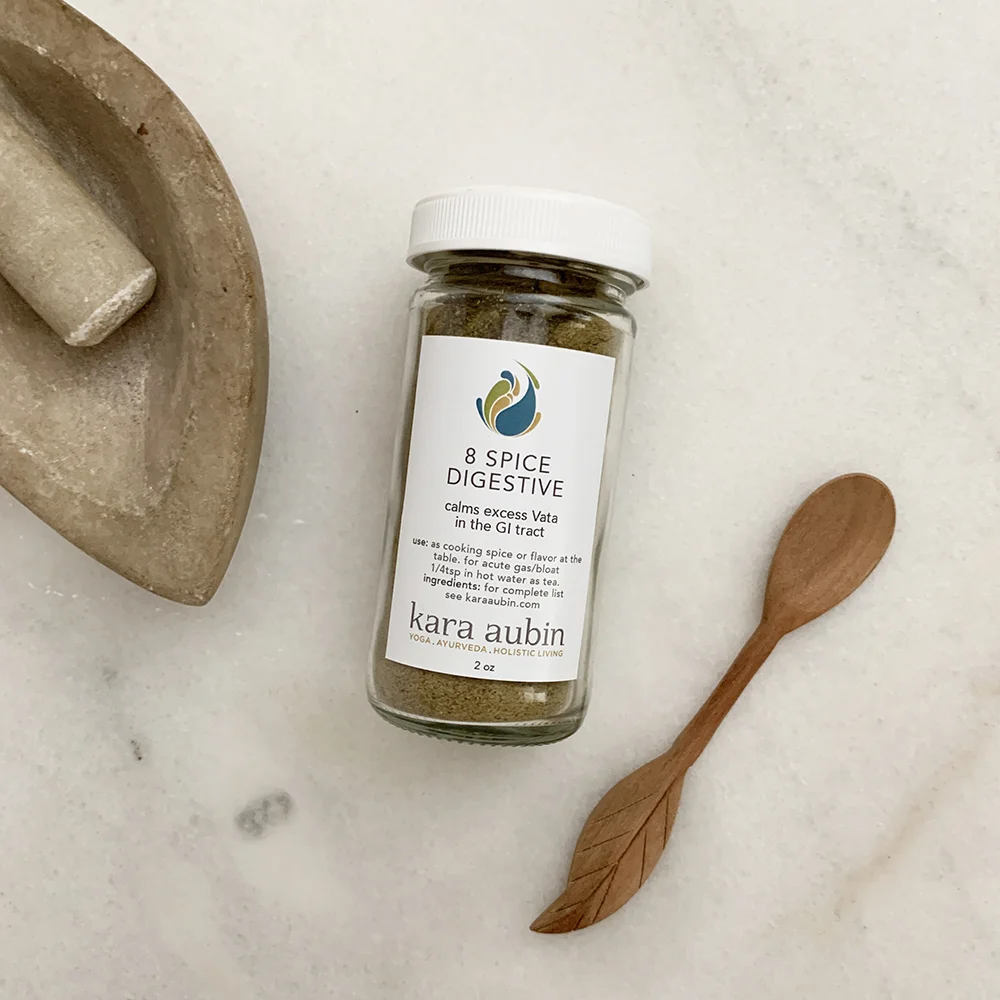
Digestive spices like ginger, cumin, pepper, and hing can kindle Agni before and during meals and specific digestive spice blends can be taken before meals to bolster digestion.
And perhaps most importantly: the conditions for eating matter. Sitting down, being present, not eating while working or scrolling. These are not small things.
In clinical work, we also look at the full picture: your constitution, your health history, your current symptoms, your relationship to food, and your daily rhythms. From that, we build something specific to you, not just to your symptoms.
a note on when to seek support
Occasional bloating after a large meal or a period of irregular eating is common and usually self-correcting. There are a myriad of Ayurvedic tools that can support this occasional symptom. If your bloating is persistent, accompanied by pain, significant changes in bowel habits, or fatigue, those are signs worth exploring with your primary care provider or Ayurvedic practitioner. We find that with well-aligned, but simple Ayurvedic tweaks, gas and bloat can be the exception and not the rule.
ready to stop guessing?
If you have been managing bloating for months or years without lasting relief, a conversation about your digestive constitution may be the missing piece. Ayurvedic consultation does not begin with a protocol. It begins with you.
We offer a free discovery call for anyone curious about whether this kind of support is right for them. No pressure, no obligation. Just a real conversation about your health.
want to go deeper?
A few places to start if these concepts are new:
Our post on Agni, what digestive fire is and what happens when it dims.
Our post on Ama and what metabolic residue means for your daily energy.
And our On-Demand Digestive Practices library, which includes movement and breathing practices designed specifically to support digestion and elimination.
Shop our digestion + elimination supports via our online shop.
related posts






loved what you learned? feeling inspired? share this article with someone who would benefit!
you can also share via the social icons below.